Sunday, November 18, 2012

World War II Love Letters Wash Up on NJ Beach After Sandy

Superstorm Sandy destroyed towns and homes, and took lives, but a stack of 57 letters tied together with a pink ribbon survived the devastating storm.
Kathleen Mullen was taking a walk along the Henry Hudson Trail in Atlantic Highlands, N.J., the day after the storm hit when she spotted the bundle of letters.
“They were obviously tied with a pink ribbon, so I automatically knew that they were love letters,” Mullen told ABC News
She took them home, carefully dried them under the fireplace in her powerless home and began to read. The letters were written by Dorothy Fallon of Rumson, N.J., and Lynn Farnham of Vermont between 1942 and 1947.
“There isn’t much more to tell you tonight, dear,” one letter read. “I love you very much. Yours always, Dotty.”
Mullen was determined to reunite the letters with their owners. She posted about the letters on Facebook, Craigslist and eventually did a search on findagrave.com, where a Lynn Farnham was listed who died in 1992 and was buried in New Jersey.
Through the website, Mullen connected with Shelly Farnham-Hilber, a niece of the couple, who lives in Virginia. She was thrilled to hear of the find.
“It’s magical. You go, ‘This can’t be real,’” Farnham-Hilber told WABC-TV. “It’s like a genealogical gold mine. It’s just that moment that you think is lost forever and here is something. It’s a gift.”
Farnham-Hilber said that Lynn Farnham, her uncle, served in WWII and was at Pearl Harbor. The couple had two children. The son has died and Farnham-Hilber’s family has lost touch with the daughter. Dorothy Farnham is 91 years old and lives in a nursing home in New Jersey.
The family is looking forward to being reunited with the letters and the find was a beacon of light to Mullen during tough times.
“It kind of sent the message that love conquers all, you know, in such devastation … something so delicate just washes ashore,” she said.

Best Women’s Clothing Choices for Shapely Females


Whether or not you are formally overweight or just a bit more substantial than you want to become, you shouldn’t try to “hide” your self inside of over-sized clothes as well as ugly everyday put on types. There’s well-fitting everyday garments available today and creative designers just like Elan Global have inked their best to produce a wide selection of plus size clothes for females. A rule that you ought to always remember when you are out there looking for females clothes are in order to avoid getting garments which can be either too large or perhaps too small. Sexy females have a tendency to veer a proven way or the other much more fact getting casual wear that suits perfectly will far better more shapely the number. So what In the event you put on? Here are a few suggestions: 1. Flowing style clothes are the best choice between sexy women today. Moving casual covers contact focus on the arms and shoulder blades and for that reason abandon your problem places from focus. You will want to steer clear of trend clothes which can be too form fitting or clingy because this will simply accentuate the characteristics you do not want revealed. The bubble casual top through Elan International pulls your eyes in the direction of your fairly solders and helps to create a very female appear with little effort required by you. 2. Maxi attire are usually fresh and also modern along with they are ideal for full figured women. Elan International includes a wide selection of maxi dress dresses of their assortment for the larger lady and each of them are distinctive generating together with striking colors and designs. In relation to dresses for females, this is definitely your best option regarding shapely ladies since it is able to conceal problem areas while creating a weight reduction appearance at the same time. You need to point out right here which of the many casual clothing parts these days, this really is the most comfy of all of them! 3. Jeans for females shouldn’t be omitted out of this list. It might appear like a daunting job to find a set of dress trousers or otherwise not that suit your unique needs but when you will find these you will never depart them. The proper couple of pants may more shapely your existing characteristics but just as mentioned previously, needy jeans should be prevented. Elan International has created the rollover pant type which is great for any sexy determine. You can put on all of them as high or low as you would like to be able to which is an edge don’t assume all pants for ladies can provide you. Guarantee the lower leg opening just isn’t also wide however, not as well slim possibly, the refined flare or even shoe cut is the better choice for virtually any pant leg to make a weight reduction result. I was so inspired with what I have learned about this on the main site, therefore I had to write my ideas about it. To get more excellent information regarding this short article, make sure to look into korean Blouse or learn more here.

With Regards To Living Green You Will Find That Recycling Is Really A Good Place To Start

Living Green Can Begin Inside Your House Simply By Recycling
When many people think about going green, they immediately envision people dwelling in a camper and making their own clothes and growing their own food. While there is absolutely nothing wrong with that, you need not go to such measures to begin living a green lifestyle. Empty bottles and cans are still being routinely discarded with our daily scraps. The environment will be helped if you can just take the time to keep these items separate so they can be reprocessed.
Empty bottles and cans are possibly the best place to get started. If you actually went through your scraps, I can guarantee that you will see other items that you can recycle. In terms of what can be recycled, we will now take a look at what else might be appropriate even if most folks are not fully aware of this.
Old newspapers are the first example of items that could be recycled. On a daily basis, newspapers are discarded by people once they are satisfied they have read everything they wanted to. Recycling newsprint’s does not usually enter the heads of most folks. But newspapers are made out of paper, which can be recycled so newspapers must also be recycled. If more folks would only recycle their newspapers, we could help save millions of trees each year. Newspapers are simply a starting point here. Recycling paper of any sort must be considered rather than just discarding it. There are other paper products that are recyclable such as cardboard boxes.
One other thing many people forget ti recycle is their food containers. Plastic containers such as ketchup bottles, mayonnaise containers and even pickle jars are all recyclable. In some instances, these types of things are just going out with the normal trash. It is economic for these type of things to be recycled because they will be used in future goods and it is likewise good for the planet to do this. And when the production of containers is decreased because people are recycling, the smoke stacks from those factories also don’t create as much pollution.
Clothes are something else that are frequently overlooked in terms of recycling. There are different ways that clothes can be made use of. Unwanted clothes for recycling are being utilized by businesses to produce insulation for houses. As cotton is chiefly used, insulating a home in this manner is safe and there is the added benefit that unwanted clothes are not being taken to a landfill site. So next time, don’t just toss a shirt because it has a hole in it. There are numerous ways a torn shirt can be utilized.
Papers, glass and plastics are all recyclable and it is important that you try to remember this. Put differently, you can recycle most of what you currently put in your normal rubbish. The impact on our planet would be considerable if everyone began recycling all of those things that can be reused. So if you desire to start living a greener life, get started on recycling.

Monday, March 29, 2010

HOW TO WRITE GOOD

My several years in the word game have learnt me several rules:
Avoid alliteration. Always.
Prepositions are not words to end sentences with.
Avoid cliches like the plague. (They're old hat.)
Employ the vernacular.
Eschew ampersands & abbreviations, etc.
Parenthetical remarks (however relevant) are unnecessary.
It is wrong to ever split an infinitive.
Contractions aren't necessary.
Foreign words and phrases are not apropos.
One should never generalize.
Eliminate quotations. As Ralph Waldo Emerson once said: "I hate quotations. Tell me what you know."
Comparisons are as bad as cliches.
Don't be redundant; don't use more words than necessary; it's highly superfluous.
Profanity sucks.
Be more or less specific.
Understatement is always best.
Exaggeration is a billion times worse than understatement.
One-word sentences? Eliminate.
Analogies in writing are like feathers on a snake.
The passive voice is to be avoided.
Go around the barn at high noon to avoid colloquialisms.
Even if a mixed metaphor sings, it should be derailed.
Who needs rhetorical questions?

Monday, March 22, 2010

The world's only immortal animal


(Photo: Peter Schuchert)

The turritopsis nutricula species of jellyfish may be the only animal in the world to have truly discovered the fountain of youth.

Since it is capable of cycling from a mature adult stage to an immature polyp stage and back again, there may be no natural limit to its life span. Scientists say the hydrozoan jellyfish is the only known animal that can repeatedly turn back the hands of time and revert to its polyp state (its first stage of life).

The key lies in a process called transdifferentiation, where one type of cell is transformed into another type of cell. Some animals can undergo limited transdifferentiation and regenerate organs, such as salamanders, which can regrow limbs. Turritopsi nutricula, on the other hand, can regenerate its entire body over and over again. Researchers are studying the jellyfish to discover how it is able to reverse its aging process.

Because they are able to bypass death, the number of individuals is spiking. They're now found in oceans around the globe rather than just in their native Caribbean waters. "We are looking at a worldwide silent invasion," says Dr. Maria Miglietta of the Smithsonian Tropical Marine Institute.

Free will is an illusion, biologist says

(PhysOrg.com) -- When biologist Anthony Cashmore claims that the concept of free will is an illusion, he's not breaking any new ground. At least as far back as the ancient Greeks, people have wondered how humans seem to have the ability to make their own personal decisions in a manner lacking any causal component other than their desire to "will" something. But Cashmore, Professor of Biology at the University of Pennsylvania, says that many biologists today still cling to the idea of free will, and reject the idea that we are simply conscious machines, completely controlled by a combination of our chemistry and external environmental forces.
In a recent study, Cashmore has argued that a belief in free will is akin to religious beliefs, since neither complies with the laws of the physical world. One of the basic premises of biology and biochemistry is that biological systems are nothing more than a bag of chemicals that obey chemical and physical laws. Generally, we have no problem with the “bag of chemicals” notion when it comes to bacteria, plants, and similar entities. So why is it so difficult to say the same about humans or other “higher level” species, when we’re all governed by the same laws?

No causal mechanism

As Cashmore explains, the human brain acts at both the conscious level as well as the unconscious. It’s our consciousness that makes us aware of our actions, giving us the sense that we control them, as well. But even without this awareness, our brains can still induce our bodies to act, and studies have indicated that consciousness is something that follows unconscious neural activity. Just because we are often aware of multiple paths to take, that doesn’t mean we actually get to choose one of them based on our own free will. As the ancient Greeks asked, by what mechanism would we be choosing? The physical world is made of causes and effects - “nothing comes from nothing” - but free will, by its very definition, has no physical cause. The Roman philosopher and poet Lucretius, in reference to this problem of free will, noted that the Greek philosophers concluded that atoms "randomly swerve" - the likely source of this movement being the numerous Greek gods.

Today, as researchers gain a better understanding of the molecular details underlying consciousness, some people think that we may discover a molecular mechanism responsible for free will - but Cashmore doesn’t think so. Such a discovery, he says, would require a new physical law that breaks the causal laws of nature. As it is, the only “wild card” that allows any room for maneuvering outside of genetics and one’s environment is the inherent uncertainty of the physical properties of matter, and even this stochastic element is beyond our conscious control. (However, it can help explain why identical twins growing up in the same environment are unique individuals.)

To put it simply, free will just doesn’t fit with how the physical world works. Cashmore compares a belief in free will to an earlier belief in vitalism - the belief that there are forces governing the biological world that are distinct from those governing the physical world. Vitalism was discarded more than 100 years ago, being replaced with evidence that biological systems obey the laws of chemistry and physics, not special biological laws for living things.

“I would like to convince biologists that a belief in free will is nothing other than a continuing belief in vitalism (or, as I say, a belief in magic),” Cashmore told PhysOrg.com.

Conscious Deception

It all seems quite rational, so why is our lack of free will so difficult to accept for many people? Cashmore explains that there are several compelling reasons that people have for believing in free will, not the least of which is that we have a constant awareness of making decisions that seem to be driven by our own volition. In addition, free will is a very useful concept when it comes to the justice system; we take responsibility for our criminal actions and accordingly, are eligible for personal punishment, which is deemed to be necessary for protecting society.

However, Cashmore argues that there are deeper explanations for why we think we have free will. He thinks that there must be a genetic basis for consciousness and the associated belief in free will. Consciousness has an evolutionary selective advantage: it provides us with the illusion of responsibility, which is beneficial for society, if not for individuals as well. In this sense, consciousness is our “preview function” that comforts us into thinking that we are in control of what we will (or at least may) do ahead of time. As Cashmore notes, the irony is that the very existence of these "free will genes" is predicated on their ability to con us into believing in free will and responsibility. However, in reality, all behavioral decisions are nothing more than a reflection of our genetic and environmental history.

“Whereas the impressions are that we are making ‘free’ conscious decisions, the reality is that consciousness is simply a state of awareness that reflects the input signals, and these are an unavoidable consequence of GES [genes, environment, and stochasticism],” Cashmore explained.

“Few neurobiologists would argue with the notion that consciousness influences behavior by acting through unconscious neural activity,” he said. “More controversial is the notion that consciousness plays a relatively minor role in governing our behavior. The conscious mind is conceivably more a mechanism of following unconscious neural activity than it is one of directing such activity. I find it interesting to compare this line of thinking with that of Freud, who created a controversy by suggesting that the unconscious mind played a role in our behavior. The way of thinking regarding these matters now has moved to the extent that some are questioning what role, if any, the conscious mind plays in directing behavior. Namely, Freud was right to an extent that was much greater than he realized.”

To summarize, Cashmore’s argument is that free will is an illusion derived from consciousness, but consciousness has an evolutionary advantage of conferring the illusion of responsibility. So what is the point of publicizing the fact that we have no free will, and letting everyone off the hook of individual responsibility? Cashmore says that, as researchers deepen their understanding of the molecular basis of human behavior, it will become increasingly difficult to entertain the fallacy of free will.

Can’t Be Held Responsible

Perhaps the most obvious impact of this paradigm shift will be on our judicial system, in which the notions of free will and responsibility form an integral component. Currently, in order to be found guilty, a criminal must be considered responsible for his actions; otherwise, he can be found not guilty by reason of insanity. Cashmore disagrees with these rules, noting that psychiatric research is finding its way more and more into the courts and causing time-wasting debates. (For example, is alcoholism a disease? Are sex crimes an addiction?)

“Where is the logic in debating an individual’s level of responsibility, when the reality is that none of us are biologically responsible for our actions?" he said.

Cashmore proposes a change, based on “the elimination of the illogical concept that individuals are in control of their behavior in a manner that is something other than a reflection of their genetic makeup and their environmental history.”

He says that psychiatrists and other experts on human behavior should not be involved in initial judicial proceedings. The jury should simply determine whether or not a defendant is guilty of committing a crime, and not be concerned with mental issues. Then, if the defendant is found guilty, a court-appointed panel of experts would advise on the most appropriate punishment and treatment. Cashmore argues that, even though individuals are not biologically responsible for their actions, in order to minimize criminal activity, people should still be held accountable, and be punished when necessary. Such punishment is rationalized on the grounds that it will serve as an incentive (an environmental influence) not to participate in criminal behavior.

“Here I introduce the practice of ‘I am sorry about this but I am going to have to beat you,’” Cashmore said. “This punishment is rationalized in the sense that it serves as a lesson to individuals not to break the law. So people would be held accountable for their actions, even though they are not ‘biologically responsible’ for such actions. This punishment may involve fines or placing people in prison. Such punishment should not reflect any sense of retribution, and given this I do not personally see how one could continue to impose the death penalty - the alleged effectiveness of such a penalty presumably being far outweighed by its unfairness. The exact way in which one balances the presumptive requirement for punishment, and the lack of biological responsibility, would indeed be difficult, and would require much discussion within the legal system and society as a whole.”

He said that tailoring punishment on an individual basis is presently done, at least to some extent.

“Why is it important to make a change? Because increasingly the legal system is being forced to confront the reality that people’s behavior is governed by nothing other than their biological history: their genes, their environment and a degree of stochasticism (if you wish, a degree of chance). The legal system is increasingly seen to be a farce, with lawyers spending endless time and money debating this nonsensical question of how responsible or not their clients are. Why nonsensical? Because no one is biologically responsible for their actions. As Francis Crick said, ‘Dream as we may, reality knocks relentlessly at the door.’ And as a result of the rapid and ongoing progress in neuroscience, the reality that individual behavior is governed by one’s genetic and environmental history is becoming increasingly apparent.”

Friday, November 13, 2009

Obama tops Forbes list of world's most powerful people


SINGAPORE (Reuters Life!) – U.S. President Barack Obama can add another accolade to his already long list of awards after being named the world's most powerful person in an inaugural ranking by Forbes magazine.

Obama, whose popularity at home and abroad has boosted the image of the United States according to numerous surveys, topped the list that also features al Qaeda leader Osama bin Laden and TV talk show host Oprah Winfrey as people wielding some influence over the world.

In compiling the inaugural ranking, Forbes said it had narrowed the list to 67 people, "a number based on the conceit that one can reduce the world's 6.7 billion people to the one in every 100 million that matter."

"The goal in compiling this list is to expose power and not glorify it, and over time reveal how influence is as easily lost as it is hard to gain," the magazine said.

World and industry leaders dominated the top 10 of the list, which Forbes said was assessed on the number of people the person influences, their ability to project power beyond their immediate sphere of influence, their control of financial resources and how actively that person wields power.

Also on the list were financial heavyweights including Goldman Sachs Chief Executive Lloyd Blankfein (18) and billionaire investor and philanthropist Warren Buffett (14), as well as Pope Benedict (11).

Bin Laden came in at number 37 and Winfrey at number 45.

British Prime Minister Gordon Brown came in at number 29 while Queen Elizabeth failed to make the list.

The top 10 list is as follows:

1. U.S. President Barack Obama

2. Chinese President Hu Jintao

3. Russian Prime Minister Vladimir Putin

4. U.S. Federal Reserve Chairman Ben Bernanke

5. Google founders Sergey Brin and Larry Page

6. Carlos Slim, Chief Executive of Mexico's Telmex

7. Rupert Murdoch, chairman of media group News Corp.

8. Michael T. Duke, Chief executive, Wal-Mart Stores

9. Saudi Arabia's King Abdullah bin Abdul Aziz

10. Bill Gates, co-chairman, Bill & Melinda Gates Foundation

Thursday, November 12, 2009

Space hotel says it's on schedule to open in 2012


The cost of a three-night stay at ‘Galactic’ resort estimated at $4.4 million

BARCELONA, Spain - A company behind plans to open the first hotel in space says it is on target to accept its first paying guests in 2012 despite critics questioning the investment and time frame for the multi-billion dollar project.

The Barcelona-based architects of The Galactic Suite Space Resort say it will cost $4.4 million for a three-night stay at the hotel, with this price including an eight-week training course on a tropical island.

During their stay, guests would see the sun rise 15 times a day and travel around the world every 80 minutes. They would wear Velcro suits so they can crawl around their pod rooms by sticking themselves to the walls like Spiderman.
Galactic Suite Ltd's CEO Xavier Claramunt, a former aerospace engineer, said the project will put his company at the forefront of an infant industry with a huge future ahead of it, and forecast space travel will become common in the future.

"It's very normal to think that your children, possibly within 15 years, could spend a weekend in space," he told Reuters Television.

A nascent space tourism industry is beginning to take shape with construction underway in New Mexico of Spaceport America, the world's first facility built specifically for space-bound commercial customers and fee-paying passengers.

British tycoon Richard Branson's space tours firm, Virgin Galactic, will use the facility to propel tourists into suborbital space at a cost of $200,000 a ride.

Galactic Suite Ltd, set up in 2007, hopes to start its project with a single pod in orbit 280 miles above the earth, with the capacity to hold four guests and two astronaut-pilots.

It will take a day and a half to reach the pod — which Claramunt compared to a mountain retreat, with no staff to greet the traveler.

"When the passengers arrive in the rocket, they will join it for three days, rocket and capsule. With this we create in the tourist a confidence that he hasn't been abandoned. After three days the passenger returns to the transport rocket and returns to earth," he said.

More than 200 people have expressed an interest in traveling to the space hotel and at least 43 people have already reserved.

The numbers are similar for Virgin Galactic with 300 people already paid or signed up for the trip but unlike Branson, Galactic Suite say they will use Russian rockets to transport their guests into space from a spaceport to be build on an island in the Caribbean.
But critics have questioned the project, saying the time frame is unreasonable and also where the money is coming from to finance the project.

Claramunt said an anonymous billionaire space enthusiast has granted $3 billion to finance the project.

The Martian Torture Chamber


In a Berlin basement sits a small torture chamber. The air inside the hermetically sealed steel chest consists of a choking 95 percent carbon dioxide, some nitrogen, and traces of oxygen and argon. The pressure within is 1/170 that on Earth, and the thermostat is set to –50˚F—in other words, a nice afternoon on Mars. Experiments at the facility regularly subject some of Earth’s hardiest creatures to this hell, and they do just fine.
This August, several dozen scientific institutes combined forces to test a variety of Earth species in Mars-like conditions. Identifying life-forms that can survive on another planet, what mechanisms they use to do so, and what by-products they leave behind will give scientists a more specific idea of what to look for when searching for E.T., says Jean-Pierre de Vera, a biologist at the German Center for Aeronautics and Space Research (DLR), where most of the experiments are carried out.

At press time, the scientists had tested Deinococcus radiodurans, a bacterium known for its radiation tolerance, Xanthoria elegans, a lichen that thrives in Antarctica and low-oxygen conditions, and Bacillus subtilis, a comparatively ordinary bacteria found in soil around the planet. “I was astonished that organized, symbiotic communities such as lichens [which consist of fungi and photosynthetic algae or bacteria] can survive,” de Vera says. After 22 days, 80 to 90 percent of the lichens were not only alive but active—it seems that complex life-giving processes can happen off-planet. For one thing, de Vera says, “this is the first evidence that organisms might conduct photosynthesis on Mars.” Next he plans to investigate whether methane-producing bacteria, which could account for Mars’s methane clouds, can make it on the planet.

Vatican looks to heavens for signs of alien life


VATICAN CITY – E.T. phone Rome. Four hundred years after it locked up Galileo for challenging the view that the Earth was the center of the universe, the Vatican has called in experts to study the possibility of extraterrestrial alien life and its implication for the Catholic Church.

"The questions of life's origins and of whether life exists elsewhere in the universe are very suitable and deserve serious consideration," said the Rev. Jose Gabriel Funes, an astronomer and director of the Vatican Observatory.

Funes, a Jesuit priest, presented the results Tuesday of a five-day conference that gathered astronomers, physicists, biologists and other experts to discuss the budding field of astrobiology — the study of the origin of life and its existence elsewhere in the cosmos.

Funes said the possibility of alien life raises "many philosophical and theological implications" but added that the gathering was mainly focused on the scientific perspective and how different disciplines can be used to explore the issue.

Chris Impey, an astronomy professor at the University of Arizona, said it was appropriate that the Vatican would host such a meeting.

"Both science and religion posit life as a special outcome of a vast and mostly inhospitable universe," he told a news conference Tuesday. "There is a rich middle ground for dialogue between the practitioners of astrobiology and those who seek to understand the meaning of our existence in a biological universe."

Thirty scientists, including non-Catholics, from the U.S., France, Britain, Switzerland, Italy and Chile attended the conference, called to explore among other issues "whether sentient life forms exist on other worlds."

Funes set the stage for the conference a year ago when he discussed the possibility of alien life in an interview given prominence in the Vatican's daily newspaper.

The Church of Rome's views have shifted radically through the centuries since Italian philosopher Giordano Bruno was burned at the stake as a heretic in 1600 for speculating, among other ideas, that other worlds could be inhabited.

Scientists have discovered hundreds of planets outside our solar system — including 32 new ones announced recently by the European Space Agency. Impey said the discovery of alien life may be only a few years away.

"If biology is not unique to the Earth, or life elsewhere differs bio-chemically from our version, or we ever make contact with an intelligent species in the vastness of space, the implications for our self-image will be profound," he said.

This is not the first time the Vatican has explored the issue of extraterrestrials: In 2005, its observatory brought together top researchers in the field for similar discussions.

In the interview last year, Funes told Vatican newspaper L'Osservatore Romano that believing the universe may host aliens, even intelligent ones, does not contradict a faith in God.

"How can we rule out that life may have developed elsewhere?" Funes said in that interview.

"Just as there is a multitude of creatures on Earth, there could be other beings, even intelligent ones, created by God. This does not contradict our faith, because we cannot put limits on God's creative freedom."

Funes maintained that if intelligent beings were discovered, they would also be considered "part of creation."

The Roman Catholic Church's relationship with science has come a long way since Galileo was tried as a heretic in 1633 and forced to recant his finding that the Earth revolves around the sun. Church teaching at the time placed Earth at the center of the universe.

Today top clergy, including Funes, openly endorse scientific ideas like the Big Bang theory as a reasonable explanation for the creation of the universe. The theory says the universe began billions of years ago in the explosion of a single, super-dense point that contained all matter.

Earlier this year, the Vatican also sponsored a conference on evolution to mark the 150th anniversary of Charles Darwin's "The Origin of Species."

The event snubbed proponents of alternative theories, like creationism and intelligent design, which see a higher being rather than the undirected process of natural selection behind the evolution of species.

Still, there are divisions on the issues within the Catholic Church and within other religions, with some favoring creationism or intelligent design that could make it difficult to accept the concept of alien life.

Working with scientists to explore fundamental questions that are of interest to religion is in line with the teachings of Pope Benedict XVI, who has made strengthening the relationship between faith and reason a key aspect of his papacy.

Recent popes have been working to overcome the accusation that the church was hostile to science — a reputation grounded in the Galileo affair.

In 1992, Pope John Paul II declared the ruling against the astronomer was an error resulting from "tragic mutual incomprehension."

The Vatican Museums opened an exhibit last month marking the 400th anniversary of Galileo's first celestial observations.

Tommaso Maccacaro, president of Italy's national institute of astrophysics, said at the exhibit's Oct. 13 opening that astronomy has had a major impact on the way we perceive ourselves.

"It was astronomical observations that let us understand that Earth (and man) don't have a privileged position or role in the universe," he said. "I ask myself what tools will we use in the next 400 years, and I ask what revolutions of understanding they'll bring about, like resolving the mystery of our apparent cosmic solitude."

The Vatican Observatory has also been at the forefront of efforts to bridge the gap between religion and science. Its scientist-clerics have generated top-notch research and its meteorite collection is considered one of the world's best.

The observatory, founded by Pope Leo XIII in 1891, is based in Castel Gandolfo, a lakeside town in the hills outside Rome where the pope has his summer residence. It also conducts research at an observatory at the University of Arizona, in Tucson.

Russian cannibal who ate his mother given lighter sentence by judge who says 'he was starving, he needed to eat'

A cannibal who killed and ate parts of his mother had his sentence reduced by a judge who said 'he needed to eat'.

Sergey Gavrilov secured reduced time in jail after confessing: 'I did not like the meat very much. It was too fatty. But I was so hungry, I had to eat it.'

The 27-year-old was given a lenient prison sentence because the judge said he was starving and needed to eat after spending all his money on vodka and gambling machines.


The Russian man hit his mother Lyubov, 55, over the head with a brick and then strangled her with an electric cable following a row over her refusal to give him her pension money to spend on alcohol.

A court heard how he put her body on the balcony of the family flat near Samara, in southern Russia, and took her allowance before going on a two day drinking and gambling binge.

Returning to the flat, he soon ran out of food and started slicing meat from his mother's body.

'She was frozen, like meat in the freezer,' he told police.

He cooked soup and pasta with meat from his mother's body over a period of more than a month, he said.

The Russian criminal code dictates 15 years in jail for his crimes but the judge said he was reducing it slightly because Gavrilov - who previously served time in jail for robbery - pleaded guilty and 'he was not keen to eat the meat, he just was hungry'.

Gavrilov was jailed for 14 years and three months.

Psychiatric tests found the man was 'normal' mentally and fully aware of what he was doing.

He was caught when a policeman came to his flat, suspecting him of stealing a mobile phone.

The officer found the dead woman - with both her legs missing - on the balcony.

Wednesday, November 11, 2009

What Kind of Friend are YOU? The 13 Types on Facebook

When it comes to parties, I tend to arrive late. With Facebook, one of the centuries biggest parties, I made no exception. To be completely honest, I created an account many moons ago, but only to play Scrabble with a friend back East. He was my one and only friend. But when it came time a couple months ago to create the How Did You Know? fan page (have you joined yet?), I started spending quality time on Facebook, and eventually changed my fake Scrabble name to my real name, added a photo to my profile, and fleshed out some of the info.

So I’m a month into the party now, and I’m starting to see clear trends. Some friends fall into category A, while others B. What about you all? What kind of friend are you? Here’s the category breakdown (and drop a comment if you think I’ve missed any):
A) The Overzealous Updater

This is the friend who can’t go half a day without sharing What’s On His Mind. Honestly people. We really don’t need to know that you’ve just had your second shower of the day. For that matter, we didn’t need to hear about the first one either.
B) The Link-bot

This is the friend who does nothing but share links all day. Links to articles he’s read that he thinks the whole world should be reading, links to movie reviews, links to new games coming on the market, links to his Twitter page where he’s gone and posted 10 more links. There needs to be a limit. Some links are good, especially when they send people to this blog. But let’s impose a 2-link-max rule per day, what do you say?
C) The Groupie

This is the friend who has joined more groups than Marcia Brady did that one year in high school when she was overcommitted and frazzled. Asian Americans in Israel who Support Diplomacy with Iran? Really?
D) I Am My Kids

This is the friend who only uses Facebook to post photos of the little ones, or updates that read: “Tommy didn’t feel well today, so he stayed home from school.” Might as well not even have your own profile, just create one for the kid(s), no?
E) Spies (who used to) Like Us

This is the Ex who only friends you so s/he can spy on you and make sure you have fewer friends that s/he does, and that your new significant other is less attractive than s/he was.

F) The Wanna-Be

This is the person who friends someone with the great hope of becoming friends with that person in real life, be it a minor celeb, or just someone the Wanna-Be really admires from a slight distance.
G) The Two-facer

This is the friend who accepts your friend request just to be polite, but then Hides your updates immediately. Unfortunately, you have no idea who the two-facers are.
H) The Networker

This is the friend whose main purpose on Facebook is to build a list he can tap when he needs to for work/career. You know these friends because they only message you with e-mails that read “So you still over at Viacom?”
I) The OverPoker

No need to explain this one, right?
J) The Get-A-Lifer

This is the hardcore friend who has nothing better to do but subscribe and follow you via SMS.
K) The Attention Seeker*

This is the friend who posts status updates that are purposely vague, and therefore beg for a comment. Their status is all about getting you to respond, getting attention, getting sympathy. “Lori is scared, but hopes everything works out…” [*sent to me by my friend Dawn, who is definitely an M... see below]
L) The Over Suggester

Just stop. Okay? Let me figure out who I want to be friends with, okay? Honestly.
M) The Good Friend

This is the friend who mercifully doesn’t fit in any of the above categories and is, hopefully, just one of many normal, average facebookers you’ve friended. Let’s hear it for the Good Friend!

{Honorable mention: The Foodie — this is the friend who’s always posting updates with photos of plates of food}

{Favorite quote overheard when a friend of a Friend got a new Friend on FB — “Ah man, I’m now friends with my dad… Jesus.”}

Fat in Japan? You're breaking the law.


As the health care debate rages in the US, Tokyo lawmakers set a maximum waist size. Are you too fat for Japan?
By David Nakamura — Special to GlobalPost
Published: November 10, 2009 06:29 ET
Updated: November 10, 2009 09:26 ET

Editor's note: David Nakamura also contributes to The Atlantic's excellent Food blog. Read his personal take on this story, which includes the shocking revelation of his own waist size.

TOKYO, Japan — In Japan, being thin isn’t just the price you pay for fashion or social acceptance. It’s the law.

So before the fat police could throw her in pudgy purgatory, Miki Yabe, 39, a manager at a major transportation corporation, went on a crash diet last month. In the week before her company’s annual health check-up, Yabe ate 21 consecutive meals of vegetable soup and hit the gym for 30 minutes a day of running and swimming.

“It’s scary,” said Yabe, who is 5 feet 3 inches and 133 pounds. “I gained 2 kilos [4.5 pounds] this year.”

In Japan, already the slimmest industrialized nation, people are fighting fat to ward off dreaded metabolic syndrome and comply with a government-imposed waistline standard. Metabolic syndrome, known here simply as “metabo,” is a combination of health risks, including stomach flab, high blood pressure and high cholesterol, that can lead to cardiovascular disease and diabetes.

Concerned about rising rates of both in a graying nation, Japanese lawmakers last year set a maximum waistline size for anyone age 40 and older: 85 centimeters (33.5 inches) for men and 90 centimeters (35.4 inches) for women.

In the United States, the Senate and House health care reform bills have included the so-called “Safeway Amendment,” which would offer reductions in insurance premiums to people who lead fitter lives. The experience of the Japanese offers lessons in how complicated it is to legislate good health.

Though Japan’s “metabo law” aims to save money by heading off health risks related to obesity, there is no consensus that it will. Doctors and health experts have said the waistline limits conflict with the International Diabetes Federation’s recommended guidelines for Japan. Meantime, ordinary residents have been buying fitness equipment, joining gyms and popping herbal pills in an effort to lose weight, even though some doctors warn that they are already too thin to begin with.

The amount of “food calories which the Japanese intake is decreasing from 10 years ago,” said Yoichi Ogushi, professor of medicine at Tokai University and one of the leading critics of the law. “So there is no obesity problem as in the USA. To the contrary, there is a problem of leanness in young females.”

One thing’s certain: Most Japanese aren’t taking any chances.

Companies are offering discounted gym memberships and developing special diet plans for employees. Residents are buying new products touted as fighting metabo, including a $1,400 machine called the Joba that imitates a bucking bronco. The convenience store chain Lawson has opened healthier food stores called Natural Lawson, featuring fresh fruits and vegetables.

Under Japan’s health care coverage, companies administer check-ups to employees once a year. Those who fail to meet the waistline requirement must undergo counseling. If companies do not reduce the number of overweight employees by 10 percent by 2012 and 25 percent by 2015, they could be required to pay more money into a health care program for the elderly. An estimated 56 million Japanese will have their waists measured this year.

Though Japan has some of the world’s lowest rates of obesity — less than 5 percent, compared to nearly 35 percent for the United States — people here on average have gotten heavier in the past three decades, according to government statistics. More worrisome, in a nation that is aging faster than any other because of long life spans and low birth rates, the number of people with diabetes has risen from 6.9 million in 1997 to 8.9 million last year.

Health care costs here are projected to double by 2020 and represent 11.5 percent of gross domestic product. That’s why some health experts support the metabo law.

“Due to the check up, there is increased public awareness on the issue of obesity and metabolic syndrome,” said James Kondo, president of the Health Policy Institute Japan, an independent think tank. “Since fighting obesity is a habit underlined by heightened awareness, this is a good thing. The program is also revolutionary in that incentivizes [companies] to reduce obesity.”
Though the health exams for metabolic syndrome factor in blood pressure, cholesterol, blood sugar, weight and smoking, waist size is the most critical element in the Japanese law — and perhaps the most humiliating.

The hesitancy of some Japanese to expose their bare stomachs to the tape measure has led the government to allow the tape measures to be administered to clothed patients. Those who elect not to strip down are permitted to deduct 1.5 centimeters from their results.

The crudeness of the system has alarmed some doctors. Satoru Yamada, a doctor at Kitasato Institute Hospital in Tokyo, published a study two years ago in which several doctors measured the waist of the same person. Their results varied by as much as 7.8 centimeters.

“I cannot agree with waist size being the essential element,” Yamada said.

Perhaps more astounding, even before Japanese lawmakers set the waistline limits last year, the International Diabetes Federation (IDF) amended its recommended guidelines for the Japanese. The new IDF standard is 90 centimeters (35.4 inches) for men and 80 centimeters (31.5 inches) for women. But the Japanese government has yet to modify its limits.

On the day of her exam, Yabe arrived at the clinic at 8:30 in the morning. The battery of tests lasted an hour. The result: her waist was 84 centimeters — safely under the limit. She had shed 6.5 pounds thanks to her diet and exercise.

A week later, however, Yabe was back to eating pasta and other favorite foods.

“I want to keep healthy now, but I don’t know,” she said. “Maybe in December, I will have many bonenkai [year-end parties]. And next summer I will drink beer, almost every day.”

Thursday, July 30, 2009

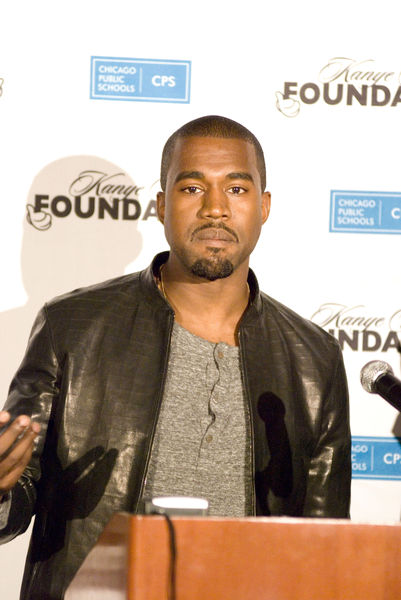
Kanye West Says He Will Be New King of Pop, Replacing Michael Jackson


Following Michael Jackson's sudden death on June 25, Kanye West claims he will become the next King of Pop, replacing the late singer. "You know everyone loves and respects Michael but times change. It's so sad to see Michael gone but it makes a path for a new King of Pop and I'm willing to take that on," so he told Scrape TV.

On what makes him deserve the title, Kanye said, "There's nobody who can match me in sales and in respect so it only makes sense for me to take over Michael's crown and become the new King." The rapper then added, "First there was Elvis [Presley], then there was Michael, now in the 21st century it's Kanye's time to rule. I have nothing but respect for Michael but someone needs to pick up where he left off and there's nobody better than me to do that. I am the new King of Pop."

Furthermore, Kanye reportedly has reached out to the Jackson family to obtain official permission to use the title but so far received no response from them. It is believed that the family is still mourning over Michael's death.

"King of Pop" was a honorific title popularized by Elizabeth Taylor when she presented Michael Jackson with Artist of the Decade prize around 1989. At that time, the British-American actress proclaimed Michael, who has sold million copies of records, as "the true king of pop, rock and soul."

* Update 07/30:
Scrape TV wrote at the bottom of its page, "All content herein should be considered rumor or truth based solely on your perspective". This interview itself hasn't been verified by Kanye West.

Tuesday, July 28, 2009

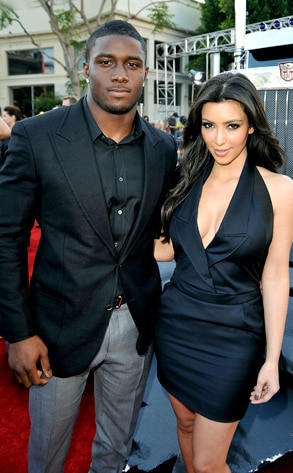
Kim Kardashian, Reggie Bush "Sad" About Breakup


When Kim Kardashian wants to disprove a rumor, she doesn't mess around.

The E! star and New Orleans Saints standout Reggie Bush have broken up, Kardashian's rep confirms to E! News, barely two months after the brunette beauty denied reports that she and Bush had been ring shopping.

Both are "very sad" about the split, a source says. "They love each other a lot and hope someday they can make it work. But for now, he starts his football season this week and Kim starts filming season four of Keeping Up With the Kardashians, and they just need this time apart."

Seems as if they were going to have time apart thrust upon them anyway, but they mutually decided to start their respective seasons as free agents.

With NFL training camp about to begin, the former couple, along with Khloé Kardashian, recently returned from a trip to Africa on behalf of the Russell Simmons Diamond Empowerment Fund.

Kardashian and Bush first stepped out as a romantic item in April 2007.

Meanwhile, the sidelines are getting increasingly less hot as opening day approaches. Dallas Cowboys quarterback Tony Romo dumped longtime gal-pal Jessica Simpson a couple of weeks ago, the night before her 29th birthday.

Mischa Barton Released From Hospital, Ready to Work


Mischa Barton has been released from Cedars-Sinai Medical Center's psychiatric unit, where she allegedly had been placed under involuntary hold since July 15.

Her rep says that she is no longer in the hospital, and intends to resume production on the CW drama, "The Beautiful Life." It's unclear how long Barton has been released.

The show, which counts Ashton Kutcher among its producers, is set to debut September 16 and has already had its schedule delayed since Barton was hospitalized, with shooting postponed from last Wednesday to this Friday. The network, however, said that filming was delayed due to "set problems" and not Barton's hospitalization.

But is it wise to put Barton in front of a camera so soon? Or will the CW push this along as quickly possible, hoping Barton's recent meltdown will bring bette ratings than "Gossip Girl?"

If Kutcher's recent claim that Barton is "doing great" is any indication, we'll likely be in September.

Monday, July 27, 2009

Katie Holmes Narrowly Escapes Injury In Car Fire


Actress Katie Holmes narrowly escaped injury on the set of her upcoming movie, Don't Be Afraid of the Dark, in Victoria, Australia over the weekend.

Holmes was shooting a scene inside a car when the vehicle's battery exploded -- sparking smoke and fumes -- before the car then caught fire.

The exploding battery was not a part of the film.

In the Miramax film (a remake of a 1973 ABC Made-for-TV movie), the wife of Tom Cruise plays a woman stalked by evil gnomes.

Rihanna And Chris Back Creeping? Whaaaaaat…


RIHANNA and CHRIS BROWN have sparked rumors of a reunion, after spending the weekend in the same hotel.

The couple split in February after the singer was arrested and charged with attacking the singer.

He pleaded guilty to the assault and was sentenced to community service and five years probation last month.

But both asked for the restraining order banning contact to be lifted recently and this weekend, according to reports in the New York Post, the couple stayed in a Manhattan hotel.

The newspaper alleges they “checked into separate rooms at the Trump International Hotel & Tower on Friday” and “spent the next two days coming and going in separate chauffeured vehicles”.

Hillary Clintons Fb